
Technical Articles
What Efficiency Improvements Can an Automatic Sprayer Pump Assembly Machine Achieve?
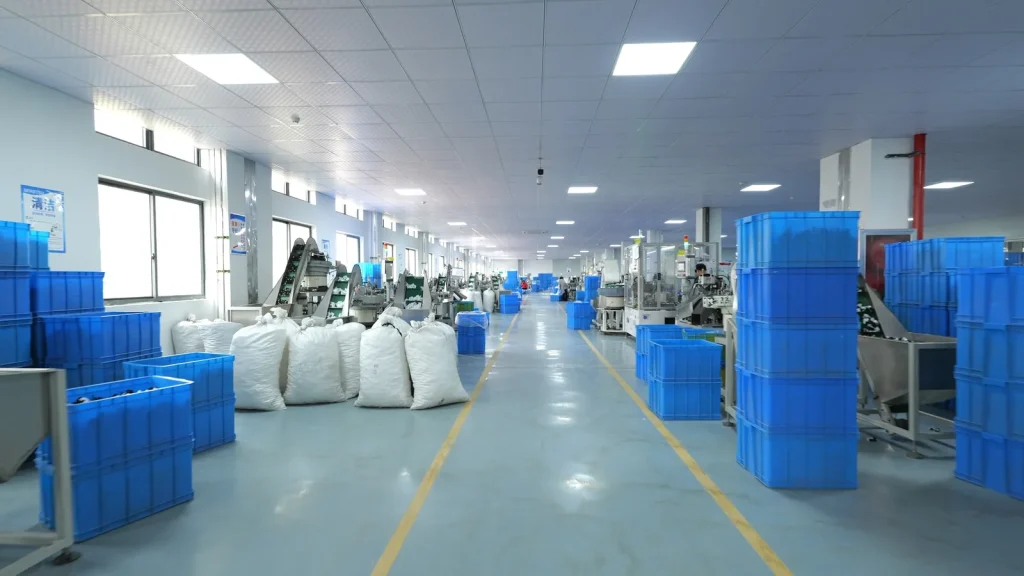
An automatic sprayer pump assembly machine can improve efficiency by stabilizing cycle time, reducing manual part handling, integrating in-process checks, and turning several disconnected operations into one controlled production flow. The largest gains usually come from removing recurring bottlenecks – such as spring feeding, ball or valve placement, press-fitting, dip tube insertion, and end-of-line inspection – rather than from chasing a headline speed alone.
The result can be higher usable output, fewer labor-dependent variations, clearer production data, and a more predictable path from molded components to finished pumps or sprayers. However, those benefits depend on part consistency, product maturity, inspection scope, and changeover needs. Automation is not a substitute for stable molded parts or a well-defined acceptance standard.
Quick answer
For a pump or sprayer manufacturer, the practical efficiency target is not simply more pieces per minute. It is more accepted pieces per planned production hour, with less manual handling, fewer unplanned stops, and repeatable quality checks.
Why Use Automated Machinery for Sprayer and Pump Assembly?
Sprayer and pump products combine many small parts with different shapes, materials, and feeding behaviors. A trigger sprayer may require a body, trigger, shroud, piston, spring, ball or valve, nozzle, and dip tube. A lotion pump may add an actuator, closure, gasket, pump core, collar, and other internal components. Each item must arrive in the correct orientation and be inserted or pressed to the correct position.
Manual teams can assemble these products, but output depends on operator pace, training, fatigue, component presentation, and the ability to notice subtle errors. A purpose-built machine converts the sequence into defined stations: feed, orient, transfer, assemble, inspect, reject, and discharge. This is why automation can improve consistency as well as capacity.
Where the Efficiency Improvement Actually Comes From
| Production constraint | Automated response | Metric to verify |
|---|---|---|
| Operators wait for or sort small parts | Vibratory bowl and linear feeders present parts in a controlled orientation | Starvation time, misfeed rate, feeder refill interval |
| Assembly pace varies by operator or shift | Indexed stations repeat a defined motion and sequence | Stable cycle time, good units per hour |
| Missing springs, balls, gaskets, or tubes are found late | Presence and position checks can be placed immediately after critical stations | False reject rate, escaped defects, rework volume |
| Press depth or insertion position varies | Dedicated fixtures and controlled press-fit or insertion stations constrain the motion | Assembly height, insertion depth, functional test result |
| Dip tube work becomes a separate bottleneck | Cutting and insertion can be integrated or balanced with upstream stations | Tube length consistency, insertion completion, line balance |
| Production problems are hard to diagnose | Sensors and machine counters can separate stops, rejects, and station faults | Uptime, jam rate, reject reason, recovery time |
This is the real production capacity advantage: less time is lost between operations, and the slowest or least stable station becomes visible. A machine should therefore be evaluated by accepted output over a representative run, not by nominal speed in isolation. Part replenishment, short stops, changeovers, inspection, and rejects all affect usable capacity.
What Problems Can an Automatic Assembly System Solve?
1. Missing or misoriented small components
Springs, balls, valves, gaskets, and small plastic inserts are easy to omit or reverse when the process relies heavily on manual handling. Automated feeding, orientation control, and presence detection can reduce this risk. The inspection must still be matched to the defect: a simple presence sensor cannot prove sealing performance, and a height check cannot confirm every functional condition.
2. Unstable press-fit and insertion results
A sprayer may look complete but fail because a component is not seated correctly. Dedicated jigs, guided motion, and controlled pressing can make the assembly path more repeatable. Acceptance criteria should define what is checked – for example, component presence, assembly height, movement, or a product-specific functional test.
3. Labor-dependent throughput
When demand grows, adding people to each manual step increases coordination, training, floor-space, and supervision requirements. Automation can shift operators toward material replenishment, quality review, changeover, maintenance, and process improvement. It may also reduce exposure to highly repetitive assembly motions.
4. Inspection becoming the next bottleneck
Increasing assembly speed without planning inspection can simply move the queue downstream. Inline checks can place control closer to the source of a defect and automatically separate suspect units. The inspection plan should prioritize failure modes that matter to the product, such as a missing spring, incorrect tube insertion, abnormal assembly height, or a failed movement check.
5. Poor coordination between molding and assembly
Pump sprayer injection molding and automated assembly cannot be treated as unrelated processes. Flash, warpage, gate vestige, surface damage, or dimensional drift can prevent a feeder from orienting a part or cause a fixture to jam. A machine may repeat its motion accurately and still produce unstable output if the incoming parts are not consistent. Reviewing molded-part geometry, tolerances, feeding direction, and assembly forces before finalizing the machine reduces this interface risk.
What Happens If You Continue Without Automated Assembly Machinery?
Not every factory needs full automation immediately. But when a stable, high-volume product remains dependent on manual assembly, several consequences tend to compound:
- Capacity expansion depends mainly on recruiting, training, and coordinating more operators.
- Output and defect patterns can vary between shifts, making delivery planning less predictable.
- Late inspection increases rework because defects are discovered after more value has been added.
- Supervisors spend more time balancing stations and responding to absenteeism or bottlenecks.
- Production data may remain too coarse to identify which component or station is causing losses.
- A new SKU can create another manual workstream instead of using a planned changeover strategy.
The cost is not limited to direct labor. It can also appear as excess work-in-process, longer lead times, uneven quality, additional handling, and slower problem diagnosis. Conversely, automating an unstable product too early can lock problems into tooling and controls. The decision should follow the product and process maturity.
Semi-Automatic vs. Automatic Pump Assembly Checklist
A semi-automatic machine is often the better bridge when volume is moderate, designs are still changing, or a difficult step benefits from operator judgment. A fully automatic system is more suitable when the product family is stable, demand is sustained, and the components can be fed and inspected reliably. Use the checklist below before requesting a quotation.
| Decision factor | Semi-automatic may fit when… | Fully automatic may fit when… |
|---|---|---|
| Demand profile | Volume is moderate, seasonal, or uncertain | Sustained volume justifies a dedicated line |
| Product maturity | Components or assembly sequence are still changing | Design, tolerances, and failure modes are stable |
| SKU variety | Frequent variation favors operator flexibility | A defined product family can use planned change parts |
| Part feedability | One or more parts are difficult to orient automatically | Parts can be presented consistently by feeders |
| Quality control | Operator judgment remains important | Defects can be translated into measurable checks |
| Labor model | Operators are available and the task is not a capacity constraint | Manual staffing limits output or consistency |
| Investment approach | A staged upgrade reduces technical and capital risk | The business case supports integrated automation |
| Floor and utilities | Space, power, or compressed air is limited | The site can support the full line and service access |
What Can Songrock’s Machines Be Configured to Do?
Songrock develops assembly equipment for trigger sprayers, lotion pumps, mist sprayers, foam pumps, cream pumps, caps, droppers, and dip tube processes. The exact station count and inspection scope require a sample and drawing review, but a project can include the following functions:
- Automatic feeding and orientation for product-specific plastic and metal components.
- Rotary indexing or coordinated station layouts for insertion, press-fitting, and subassembly.
- Fixtures and jigs designed around the customer’s component geometry and product family.
- Presence, position, height, movement, or other agreed inline checks where technically feasible.
- Automatic rejection of suspect assemblies at defined inspection points.
- Dip tube cutting and insertion as a stand-alone process or part of a balanced line.
- Changeover planning for approved sizes or closely related product variants.
- Factory Acceptance Testing with customer parts against agreed output and inspection criteria.
For lotion pump assembly projects, Songrock reviews actuators, closures, springs, balls, pump cores, and tubes before defining feeders, pressing stations, and test points. For an automatic trigger sprayer assembly machine, the assembly route may need to coordinate bodies, triggers, shrouds, pistons, springs, nozzles, and suction tubes. Buyers can compare these product-specific routes on Songrock’s sprayer and pump assembly machine overview.
Why Songrock’s Mold-to-Machine Approach Matters
Buyers searching for automatic sprayer pump assembly systems in China often compare station counts, component brands, and quoted speed. Those details matter, but the interface between the molded part and the assembly machine often determines whether the line will run consistently.
Songrock’s practical advantage is the ability to review trigger sprayer injection molds, molded components, feeding behavior, tooling, assembly sequence, and inspection requirements within one project path. This does not eliminate the need for tolerance control or acceptance testing. It reduces the handoff gap in which the mold supplier blames the machine and the machine supplier blames the parts.
Engineering fit before speed
A credible proposal should explain which parts are difficult to feed, where pressing forces or orientation matter, what defects can be detected, and which product variants require change parts. Only then should the team commit to a target cycle.
Validation with real customer parts
Factory Acceptance Testing should use representative production parts and agreed criteria. The test plan should record accepted output, stops, jams, rejects, feeder refill, changeover actions, and recovery from common faults. This provides more decision value than a short demonstration using selected components.
One technical conversation across the production chain
In pump sprayer manufacture, the mold, molded component, feeder, fixture, assembly station, inspection method, and finished-product function are connected. Songrock’s custom service process starts with samples, drawings, capacity targets, utilities, layout, and current quality bottlenecks so that the proposed automation is tied to the customer’s actual production conditions.
How to Verify the Production Capacity Advantage
Do not compare machines using a single maximum-speed figure. Ask each supplier to define the test conditions and report the losses that reduce usable output. A practical capacity review should include:
- Good units produced during the agreed run, not only total cycles.
- Planned run time and actual operating time.
- Micro-stops, feeder jams, changeovers, and material replenishment.
- Reject quantities by inspection point and the reason for rejection.
- The exact part batch, cavity mix, and dimensional condition used for the test.
- The number and role of operators needed for steady production.
- Time needed to recover from normal faults and restart the line.
These measures separate nominal machine speed from stable production output. They also create a baseline for later improvement after installation.
Information to Prepare Before Requesting a Machine
A useful technical quotation begins with complete inputs. Prepare the following before contacting an equipment supplier:
- Physical samples from normal production, including known difficult batches if available.
- 2D or 3D drawings and critical tolerances for every assembled component.
- The assembly sequence and current defects, such as missing parts, leakage-related failures, poor rebound, unstable spray, or jams.
- Required accepted output and the time basis used to calculate it.
- Product variants, expected changeover frequency, and future SKU plans.
- Required inspection and rejection logic, with clear acceptance criteria.
- Available floor space, line direction, electrical standard, and compressed-air conditions.
- FAT requirements, installation plan, operator training needs, and spare-parts expectations.
If you are evaluating a new lotion pump or trigger sprayer line, Songrock can review the component set, molded-part condition, target output, inspection points, and factory layout before recommending a semi-automatic station or a complete automatic line.
Frequently Asked Questions
How much can an automatic sprayer pump assembly machine increase output?
There is no responsible universal percentage. The improvement depends on the current manual cycle, component count, feeding difficulty, inspection scope, reject rate, uptime, and operator requirements. Compare accepted units per planned hour during a representative FAT.
Can one machine assemble both lotion pumps and trigger sprayers?
Usually, these products require different feeding, fixtures, station sequences, and tests. Closely related variants may share a platform if they are reviewed as a product family, but a sample and drawing study is needed before confirming changeover scope.
Can automation solve leakage or poor spray performance?
Automation can control assembly sequence, component presence, insertion, and pressing more consistently. It can also support selected functional checks. It cannot compensate for every material, molding, sealing-surface, or product-design problem. Root-cause analysis must separate part defects from assembly defects.
Is a fully automatic line always better than semi-automatic equipment?
No. Semi-automatic equipment may offer better flexibility and lower technical risk for lower volumes, unstable designs, or frequent changes. Full automation is most effective when the product, parts, demand, and acceptance criteria are sufficiently stable.
What should be included in FAT for a custom assembly machine?
FAT should define the sample batch, run duration, accepted output, inspection checks, reject logic, allowed stops, changeover steps, operator tasks, fault recovery, and documentation. Both parties should agree on the criteria before machine build completion.
Request an Assembly Configuration Review
An automatic sprayer pump assembly machine improves efficiency when it creates a stable flow from part feeding to accepted finished units. Its value comes from repeatable handling, balanced stations, in-process control, reduced manual dependency, and better production visibility. The machine should be selected only after confirming part feedability, molded-component consistency, product maturity, inspection needs, and real capacity targets.
Songrock’s mold-to-machine approach is designed for that engineering connection. Share your samples, drawings, current bottlenecks, target accepted output, product variants, and factory conditions to receive a configuration review based on the real assembly task.
Sources
Recommended product systems
Recommended Products
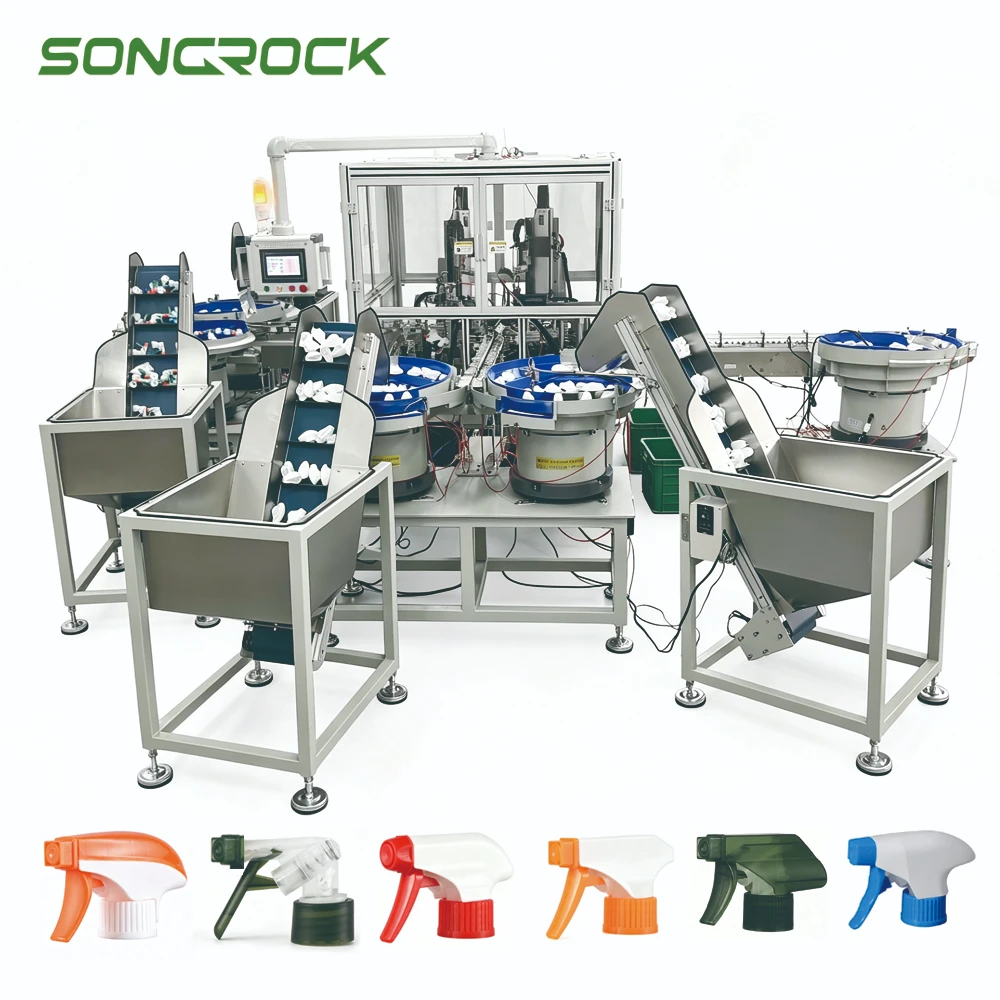 Sprayers Pumps Assembly Machine
Trigger Sprayer Cover & Dip Tube Assembly Machine SR-TSM-07
Accurate positioning, timely selection of defective products There is a product legacy detection technique to better identify problems…
Sprayers Pumps Assembly Machine
Trigger Sprayer Cover & Dip Tube Assembly Machine SR-TSM-07
Accurate positioning, timely selection of defective products There is a product legacy detection technique to better identify problems…
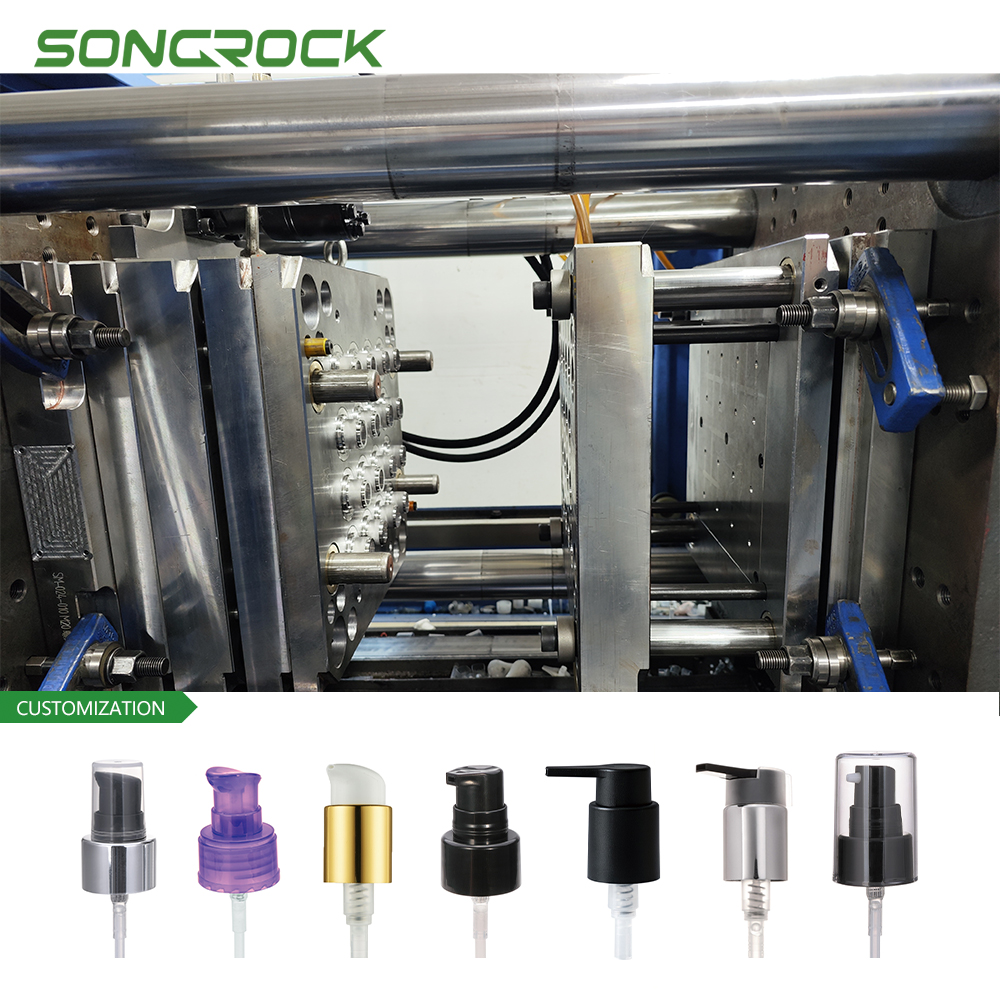 Sprayers Pumps Injection Mold
SR-CPIM-01-1 20 Double Closure Cream Pump Injection Mold
Multi-cavity design, daily output can reach thousands of parts. High-precision, durable injection mold tailored for mass production of…
Sprayers Pumps Injection Mold
SR-CPIM-01-1 20 Double Closure Cream Pump Injection Mold
Multi-cavity design, daily output can reach thousands of parts. High-precision, durable injection mold tailored for mass production of…
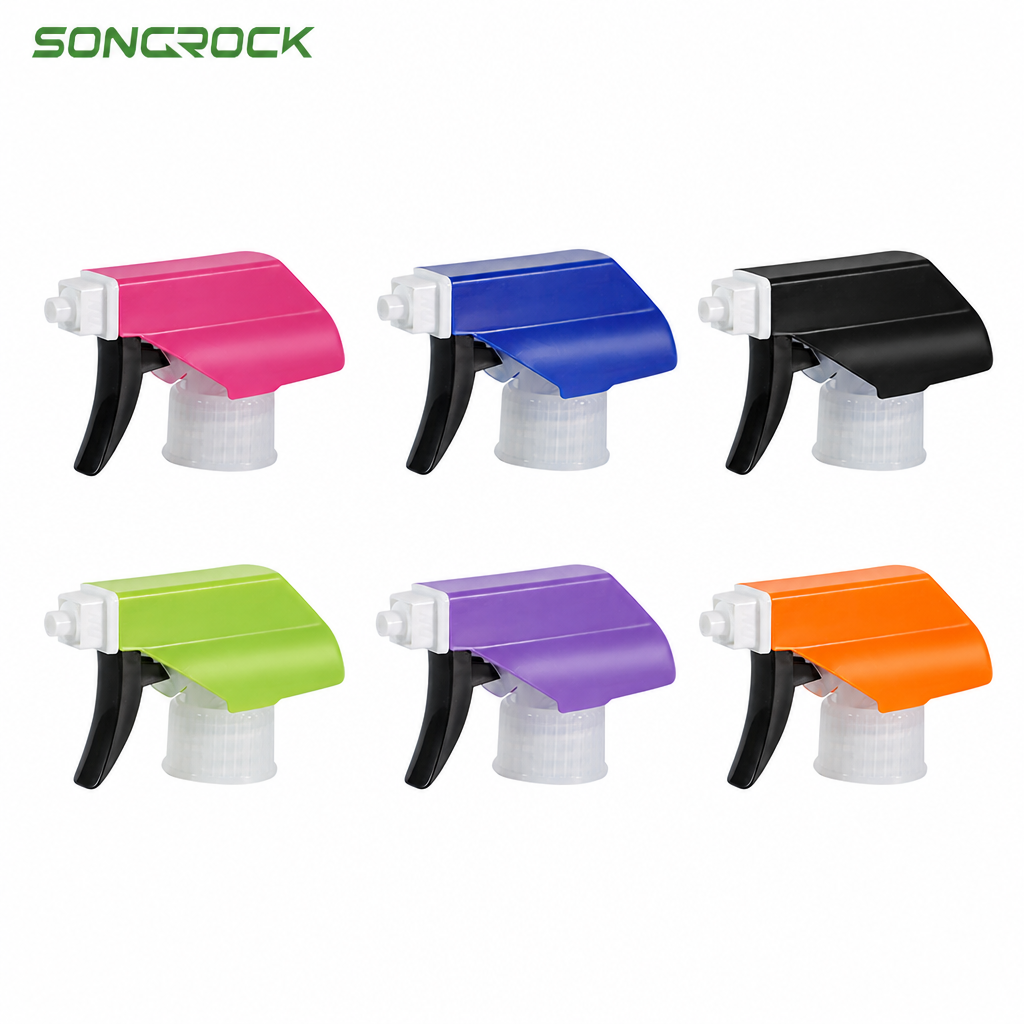 Sprayers Pumps Core Components
SM-TS-52F Foam Pump Trigger Sprayer
Sprayers Pumps Core Components
SM-TS-52F Foam Pump Trigger Sprayer
Exhibition follow-up